Metals contamination and its ecological risk assessment in the coastal sediments of Badagry Creek, Nigeria
DOI:
https://doi.org/10.26832/24566632.2025.100301Keywords:
Badagry Creek, Heavy metals, Modified degree of contamination, Potential ecological riskAbstract
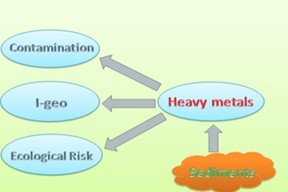
This study was carried out to assess heavy metals contamination and potential ecological risk in Badagry Creek, Nigeria. Concentrations of six heavy metals associated with environmental pollution were determined in the sediments using atomic absorption spectrophotometry. The evaluation of heavy metals pollution was determined using the geo-accumulation index (Igeo), modified degree of contamination and potential ecological risk index. Results showed the ranking order of heavy metals in the sediment was iron (Fe) > chromium (Cr) > lead (Pb) > zinc (Zn) > copper (Cu) > cadmium (Cd). Among sampling stations, Fe, Cu, and Zn concentrations was found to be significantly (p<0.05) varied, whereas the concentration of Pb, Cr, and Cd was found insignificantly (p>0.05) different. The Igeo results suggested that the sediment pollution level was found in the category of unpolluted to moderately polluted. Based on the modified degree of contamination, sediments categorized from non-contamination to slight contamination with heavy metals. The potential ecological risk to the biological community was recorded from low to moderate risk of heavy metals pollution. Among different heavy metals, Cd posed the most substantial risk across the sampling stations. Consequently, there is urgent requirement of appropriate regulation and management by the relevant regulatory bodies in order to stop the indiscriminate dumping of sewage and untreated waste into the creek.
Downloads
References
Adeyemi, M. O., Olusola J. A., Akpobasah O., Adidi, N. E., & Shelle, R. O. D. (2019). Assessment of Heavy Metals Pollution in Sediments from Ologe Lagoon, Agbara, Lagos, Nigeria. Journal of Geoscience and Environment Protection, 7,61-73 https://doi.org/10.4236/gep.2019.77006
APHA, (2005). Standard Methods for the Examination of Water and Wastewater, 21st edition American Public Health Association / American Water Works Association /Water Environment Federation, Washington DC. https://openlibrary.org/books/OL15628091M
Bam, E. K. P., Akiti, T. T., Osea, S. D., Ganyaglo, S. Y., & Gibrilla, A. (2011). Multivariate cluster analysis of some major and trace elements distribution in an unsaturated zone profile, Densu river Basin, Ghana. African Journal of Environmental Science and Technology, 5(3), 155–167. https://doi.org/10.5897/AJEST10.317
Bawa-Allah, K. A., Saliu, J. K., & Otitoloju, A. A. (2017). Integrated assessment of the heavy metal pollution status and potential ecological risk in the Lagos Lagoon, South West, Nigeria. Human and Ecological Risk Assessment: An International Journal, https://doi.org/10.1080/10807039.2017.1384694
Brady, J. P., Ayoko, G. A., Martens, W. N., & Goonetilleke, A. (2015). Development of a hybrid pollution index for heavy metals in marine and estuarine sediments. Environmental Monitoring and Assessment, 187(5), 1-14. https://doi.org/10.1007/s10661-015-4563-x
Chen, X., Zhang, H., Wong, C. U. I., Li, F., Xie, S. (2024). Assessment of Heavy Metal Contamination and Ecological Risk in Soil within the Zheng–Bian–Luo Urban Agglomeration. Processes, 12, 996. https://doi.org/10.3390/pr12050996
Clark, R. B. (1999). Marine pollution, 4th edn. Clarendon, Oxford. https://www.biblio.com/book/marine-pollution-fourth-edition-clark-r/d/1609347639
Don Pedro, K. N., Oyewo, E. O. and Otitoloju, A. A. (2004) Trend of Heavy metal concentrations in Lagos Lagoon Ecosystem, Nigeria. West Africa Journal of Applied Ecology, 5, 103-114. https://doi.org/10.4314/wajae.v5i1.45601
GESAMP (IMO/FAO/IJNESCO/WMO/IAEA/UN/IJNEP) (1982). The health of the oceans. Rep Stad GESAMP 15:108 and UNEP Res Seas Rep Stud 16:108. https:www.imo.org>en >OurWork>Environment>Pages>GESAMP
Guo, W., Liu, X., Liu, Z., & Li, G. (2010). Pollution and potential ecological risk evaluation of heavy metals in the sediments around Dongjiang Harbor, Tianjin. Procedia Environmental Sciences, 2, 729-736. https://doi.org/10.1016/j.proenv.2010. 10.084
Hakanson, L. (1980). An ecological risk index for aquatic pollution control. a sedimentological approach. Water Research, 14, 975–1001. https://doi.org/10.1016/0043-1354(80)90143-8
Hamid, E., Payandeh, K., Karimi Nezhad, M.T., & Saadati, N. (2022). Potential ecological risk assessment of heavy metals (trace elements) in coastal soils of southwest Iran. Frontiers in Public Health, 10889130: https://doi.org/10.3389/fpubh.2022.889130
Hu, B., Li, J., Zhao, J. et al. (2013). Heavy metal in surface sediments of the Liaodong Bay, Bohai Sea: distribution, contamination, and sources. Environmental Monitoring and Assessment, 185, 5071–5083. https://doi.org/10.1007/s10661-012-2926-0
Hu, J., Lin B, Yuan, M., Lao, Z., Wu, K., Zeng, Y., & Fan, H. (2019). Trace metal pollution and ecological risk assessment in agricultural soil in Dexing Pb/Zn mining area, China. Environmental Geochemistry and Health, 41(2), 967–980, doi.org/10.1007/s10653-018-0193-x
Jiang, M., Wang, Q., Tian, X., Zhu, X., Dong, X., Wu, Z., & Yuan, Y. (2022). Spatiotemporal variation and ecological risk assessment of sediment heavy metals in two hydrologically connected lakes. Frontiers in Ecology and Evolution, 10, https://doi.org/10.3389/fevo.2022.1005194
Liu, P., Wu, Q., Wang, X., Hu, W., Liu, X., & Tian, K. (2022). Spatiotemporal variation and sources of soil heavy metals along the lower reaches of Yangtze River, China. Chemosphere, 291, https://doi.org/10.1016/j.chemosphere.2021.132768
Mashiatullah, A., Chaudhary, M. Z., Ahmad, N., Javed, T., & Ghaffar, A. (2013). Metal pollution and ecological risk assessment in marine sediments of Karachi Coast, Pakistan. Environmental Monitoring and Assessment, 185, 1555–1565. https://doi.org/10.1007/s10661-012-2650-9
Muller, G. (1981). The heavy metal pollution of the sediments of Neckars and its tributary: a stocktaking. Chemiker-Zeitung, 105, 157–164. https://www.sciepub.com/reference/433170
Naik, S., Pradhan, U., Karthikeyan, P., Bandyopadhyay, D., Sahoo, R. K, Panda, U. S., Mishra, P., & Murthy, M. V. R. (2023). Ecological risk assessment of heavy metals in the coastal sediment in the South-western Bay of Bengal. Frontiers in Marine Science, 10, 1255466. https://doi.org/10.3389/fmars.2023.1255466
Naser, H. A. (2013). Assessment and management of heavy metal pollution in the marine environ ment of the Arabian Gulf: a review. Marine Pollution Bulletin, 72, 6–13. https://doi.org/10.1016/j.marpolbul.2013.04.030
Olowu, R. A., Ayejuyo, O. O., Adewuyi, G. O., Adejoro, I. A., Denloye, A. A. B., Babatunde, A. O., & Ogundajo, A. L. (2010). Determination of Heavy Metals in Fish Tissues, Water and Sediment from Epe and Badagry Lagoons, Lagos, Nigeria. E-Journal of Chemistry, 7(1), 215-221. https://doi.org/10.1155/2010/676434
Pan, K., & Wang, W.X. (2012). Trace metal contamination in estuarine and coastal environments in China. Science of the Total Environment, 421(422), 3–16. https://doi.org/10.1016/j.scitotenv.2011.03.013
Qingjie, G., Jun, D., Yunchuan, X., Qingfei, W., & Liqiang, Y. (2008). Calculating pollution indices by heavy metals in ecological geochemistry assessment and a case study in parks of Beijing. Journal of China University Geosciences, 19(3), 230-241. https://doi.org/10.1016/S1002-0705(08)60042-4
Salomons, W., & Forstner, U. (1984). Metals in the hydro cycle. Springer, Berlin. https://doi.org/10.1007/978-3-642-69325-0
Satpathy, K. K., Mohanty, A. K., Prasad, M. V. R., Natesan, U., & Sarkar, S. K. (2012). Studies on the variations of heavy metals in the marine sediments off Kalpakkam, East Coast of India. Environmental Earth Sciences, 65, 89–101. https://doi.org/10.1007/s12665-011-1067-z
Siddiquee, N. A., Parween, S., Quddus, M. M. A., & Barua, P. (2009). Heavy metal pollution in sediments at shipbreaking area of Bangladesh. Asian Journal of Water, Environment and Pollution, 6, 7–12. https://doi.org/10.3233/AJW-2009-6_3_03
Singh, J. K., Kumar, P., & Kumar, R. (2020). Ecological risk assessment of heavy metal contamination in mangrove forest sediment of Gulf of Khambhat region, West Coast of India. SN Applied Sciences, 2, 2027. https://doi.org/10.1007/s42452-020-03890-w
Tlig, N., Boye, M., Hallek, T., Burckel, P., Gzam, M. (2023). Sediment quality and environmental risk assessment in a Mediterranean coastal system using geochemical and multivariate statistical analyses: the case of Boughrara Lagoon (southeastern Tunisia). Environmental Monitoring and Assessment, 195(3), 422. https://doi.org/10.1007/s10661-023-11029-8
Turner, A., & Millward, G. E. (2000). Particle dynamics and trace metal reactivity in estuarine plumes. Estuarine, Coastal and Shelf Science, 50, 761–774. https://doi.org/10.1006/ecss.2000.0589
US EPA (United States Environmental Protection Agency), (1996). Assessment and remediation of contaminated sediments (ARCS) program Calculation and evaluation of sediment effect concentrations for the amphipod Hyalella azteca and the midge Chironomus riparius. EPA 905/R96/008. Great Lakes National Program Office. Chicago, Illinois. https://www.epa.gov/aboutepa/epa-region-5
Wedepohl, K.H. (1995). The composition of the continental crust. Geochimica Et Cosmochimica Acta, 59(7), 1217–1232. https://doi.org/10.1016/0016-7037(95)00038-2
Zar, J.H. (2001). Biostatistical analysis. Printice Hall, Englewood Cliffs, N.J. https://openlibrary.org/books/OL3171690M/
Zhang, L. P., Ye, X., & Feng, H. (2007). Heavy metal contamination in Western Xiamen bay sediments and Its Vicinity, China. Marine Pollution Bulletin, 54, 974–82. https://doi.org/10.1016/j.marpolbul.2007.02.010
Zhang, Q., Feng, M., & Hao, X. (2018). Application of Nemerow index method and integrated water quality index method in water quality assessment of Zhangze Reservoir. IOP Conference Series: Earth and Environmental Science, 128, 012160. https://doi.org/10.1088/1755-1315/128/1/012160
Zhang, R., Zhou, L., Zhang, F., Ding, Y. J., Gao, J. R., Chen, J., Yan, H. Q., & Shao, W. (2013). Heavy metal pollution and assessment in the tidal flat sediments of Haizhou Bay, China. Marine Pollution Bulletin, 74, 403–412. https://doi.org/10.1016/j.marpolbul.2013.06.019
Downloads
Published
How to Cite
Issue
Section
License
Copyright (c) 2025 Agriculture and Environmental Science Academy

This work is licensed under a Creative Commons Attribution-NonCommercial 4.0 International License.